01 / Monitoring
A closer view.
An under-eave camera explores remote visibility around the shelter. Connectivity, power and monitoring functions are defined at product level.
Innovation & development
Our outdoor coop design brings shelter construction, WPC panels and connected care features into one product development process. Specifications and validation requirements are agreed for each project.
The backyard coop
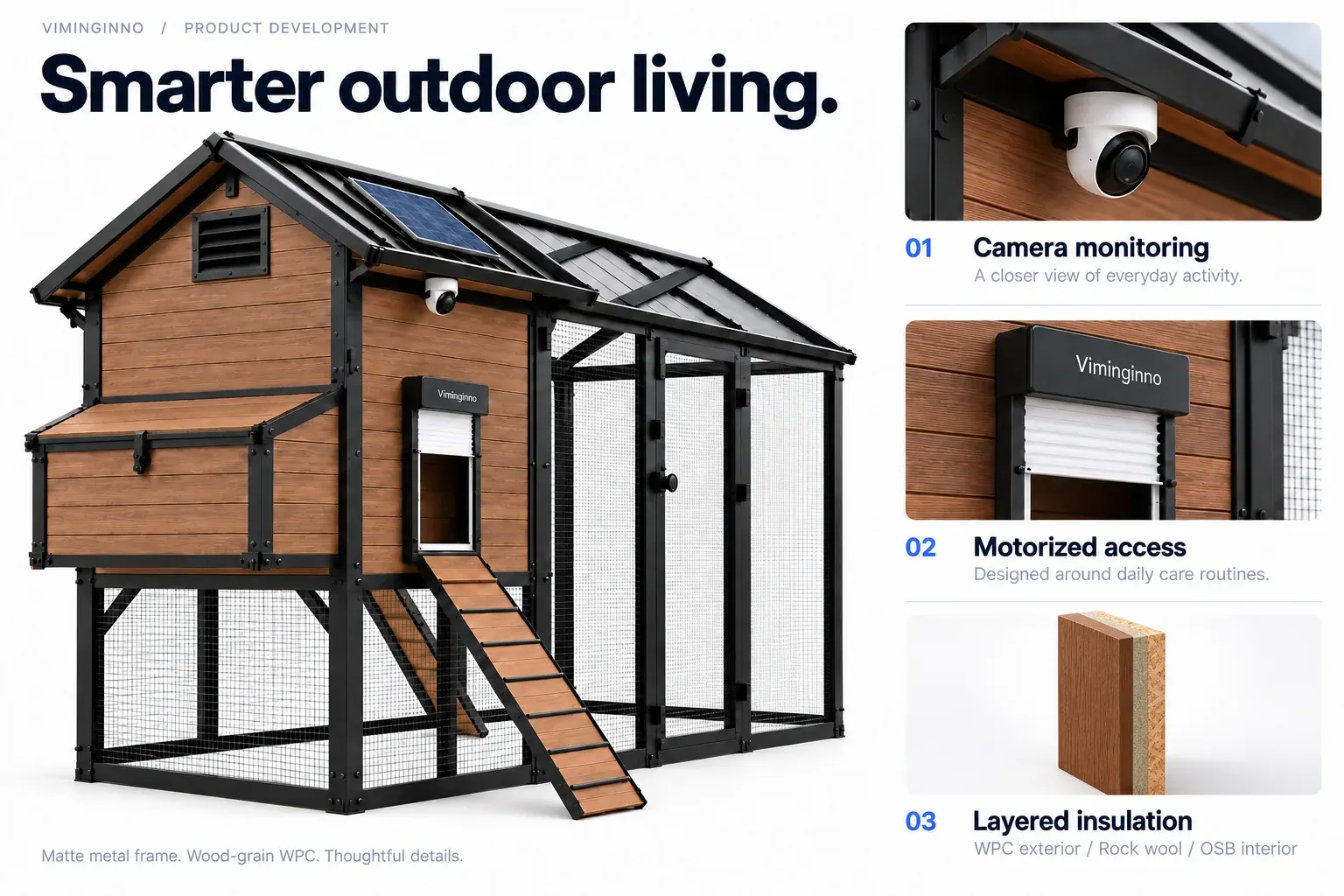
A matte metal frame and wood-grain WPC panels define the enclosure. A nesting area, access ramp and mesh run support the layout, while monitoring, motorized access and insulation explore the next layer of care.
Product details
Explore the monitoring, access and insulation details. Operation and performance are defined at product level.
01 / Monitoring
An under-eave camera explores remote visibility around the shelter. Connectivity, power and monitoring functions are defined at product level.
02 / Access
A compact motorized roll-up door integrates access into the shelter wall. Operation and safety are considered around daily care.
03 / Insulation
A WPC exterior, rock wool insulation and OSB interior backing form a layered wall structure. Thermal performance is evaluated at product level.
Further development directions
Separate research directions explore additional support for everyday care. These are not confirmed features of the pictured coop.
Feeding concepts designed to support scheduled routines, with integration and operation still to be defined.
Active airflow concepts intended to support environmental management within the shelter.
Our development process
Each stage turns a product idea into clearer decisions, with evidence guiding the next step.
We examine outdoor exposure, care routines, maintenance expectations and the commercial goals behind the product.
Intended use, size, materials, access, protection and care requirements form a shared product brief.
Form, construction, assembly and the user experience are developed together.
Prototypes help review scale, fit, stability, access and the practical details of daily use.
Materials, structures and features are evaluated against their intended use before final specifications are prepared.
Supplier capability, packaging, assembly guidance and quality controls support repeatable production.